
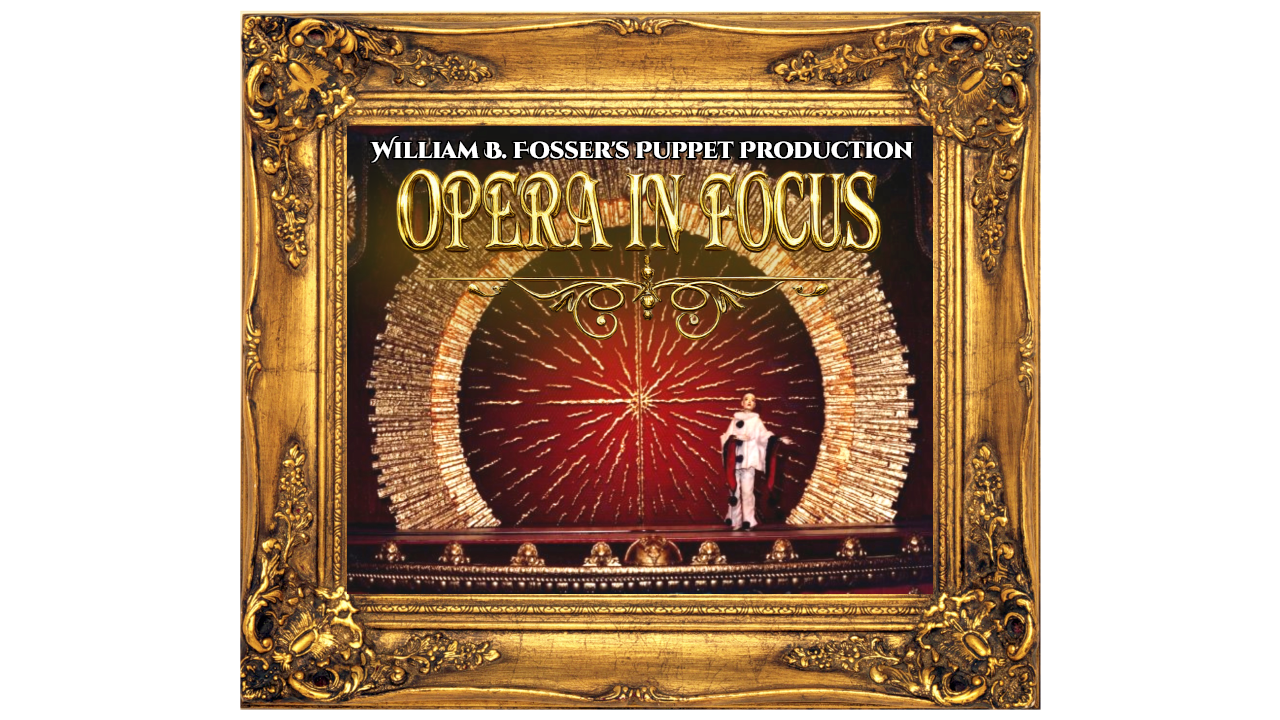

Opera in Focus opened in its present home at Park Central in Rolling Meadows on December 3, 1993. We are proud to say the following year Opera in Focus won the prestigious Dorothy Mullen Award from the National Parks and Recreation Association for Fine Arts Programming (the first of many awards we’ve been honored to receive over the years).
Our uniquely articulated rod puppets, the only ones of their kind in existence anywhere in the world, are the invention of William B. Fosser, who began work on their design in the late 1930’s. Because of their great cost, the first batch of what would now be considered fully-developed “Opera in Focus puppets” would not be built until 1956. Their first performance stage would not be built until the following year. In September of 1958 Opera in Focus was first presented in a rented storefront on Chicago’s north side.
Mr. Fosser had already begun a busy career as a motion picture art director, production designer,and set decorator, as well as frequently designing for the live theater, when the first “Invitation Only” Opera in Focus performances were held. His free time was devoted to improving the puppets, settings and stage. Because of his work in the film industry, regularly scheduled public performances were infrequent, except in 1962-63 and again in 1978-79. The invitation to install Opera in Focus permanently in Rolling Meadows in 1993 prompted his decision to retire from film and stage design (having worked on such beloved classics as “Home Alone”, “Backdraft”, “The Breakfast Club”, “Weird Science”, “Damien: The Omen II”, “Ordinary People”, “Cooley High”, “Curly Sue”, and “Groundhog Day” among others) and devote all of his time to his life-long passion for Puppet Opera. 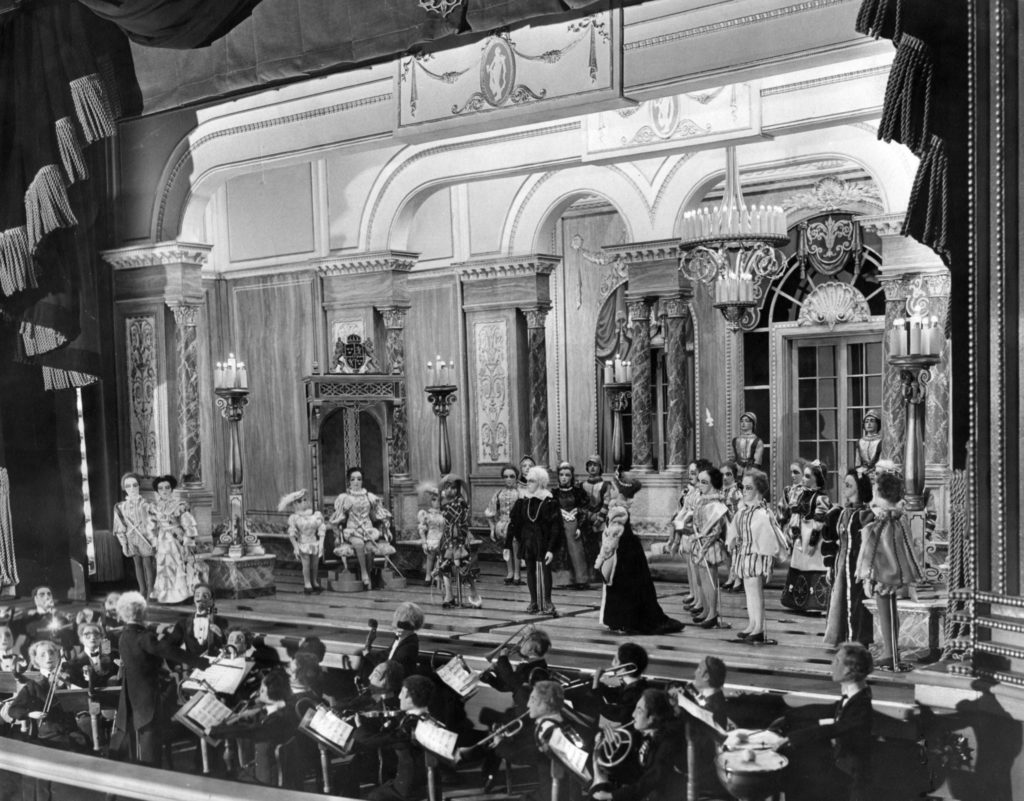
For many of the Opera in Focus audiences, our performances bring back memories of the old KUNGSHOLM MINIATURE GRAND OPERA where Mr. Fosser worked—first when he was 14 years old in 1943. The Kungsholm Miniature Opera was just two years old at the time. After performing at the old Kungsholm off and on throughout high school (his employment there contingent upon his grades), he returned for several years in 1950 before his career in commercial film began to absorb the bulk of his time. He later returned as Artistic Director of the Kungsholm Miniature Grand Opera in 1963.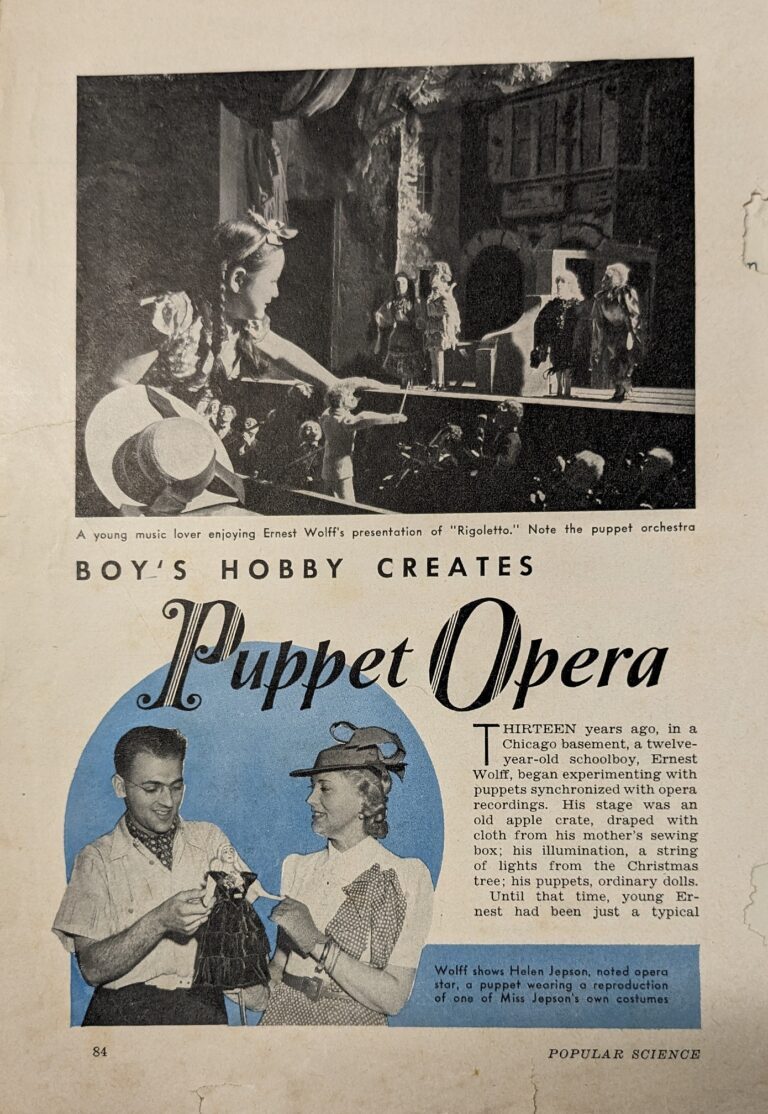
The miniature grand opera that would eventually find its way to the KUNGSHOLM was begun in the early 1930’s by an avid operatic recording collector, Ernest Wolff, who had built a rather complete miniature opera theater in the basement of his home. His mother, Esther, and a family friend, Fred Stouffer, devised puppets that would move on the tiny stage in slots and be operated from below by wires. This first incarnation of the Puppet Opera was called: “THE CHICAGO MINIATURE GRAND OPERA”.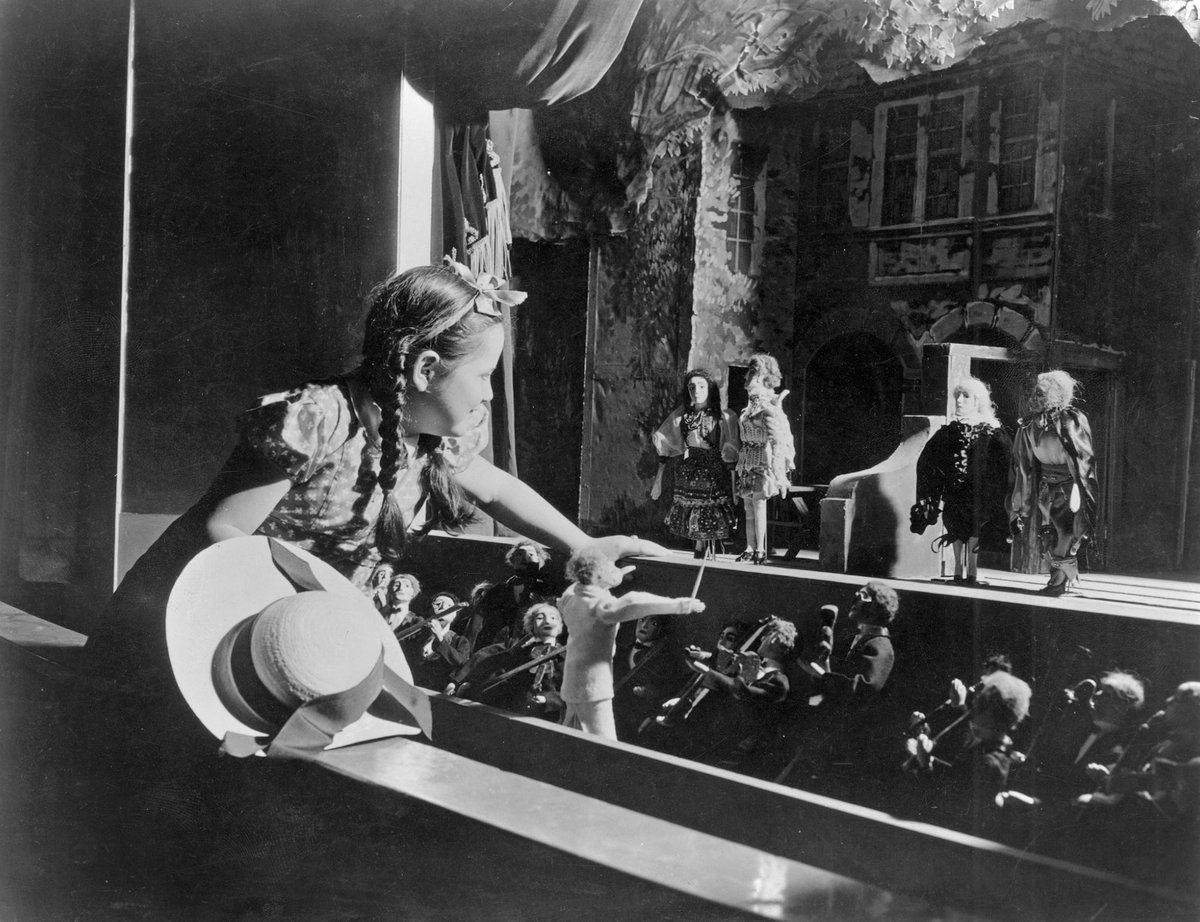
Their efforts were greatly refined under the sponsorship of the Victor Recording Company for presentation in the Gas Pavilion at the Worlds Fair in 1938-39. After the close of the Fair their puppet opera began a tour of the mid-western United States. The last stop of this tour was Chicago, where it was seen by Fredrick Chramer, who had purchased one of the McCormick mansions, located at Rush and Ontario streets, and converted it into a very successful restaurant called the KUNGSHOLM.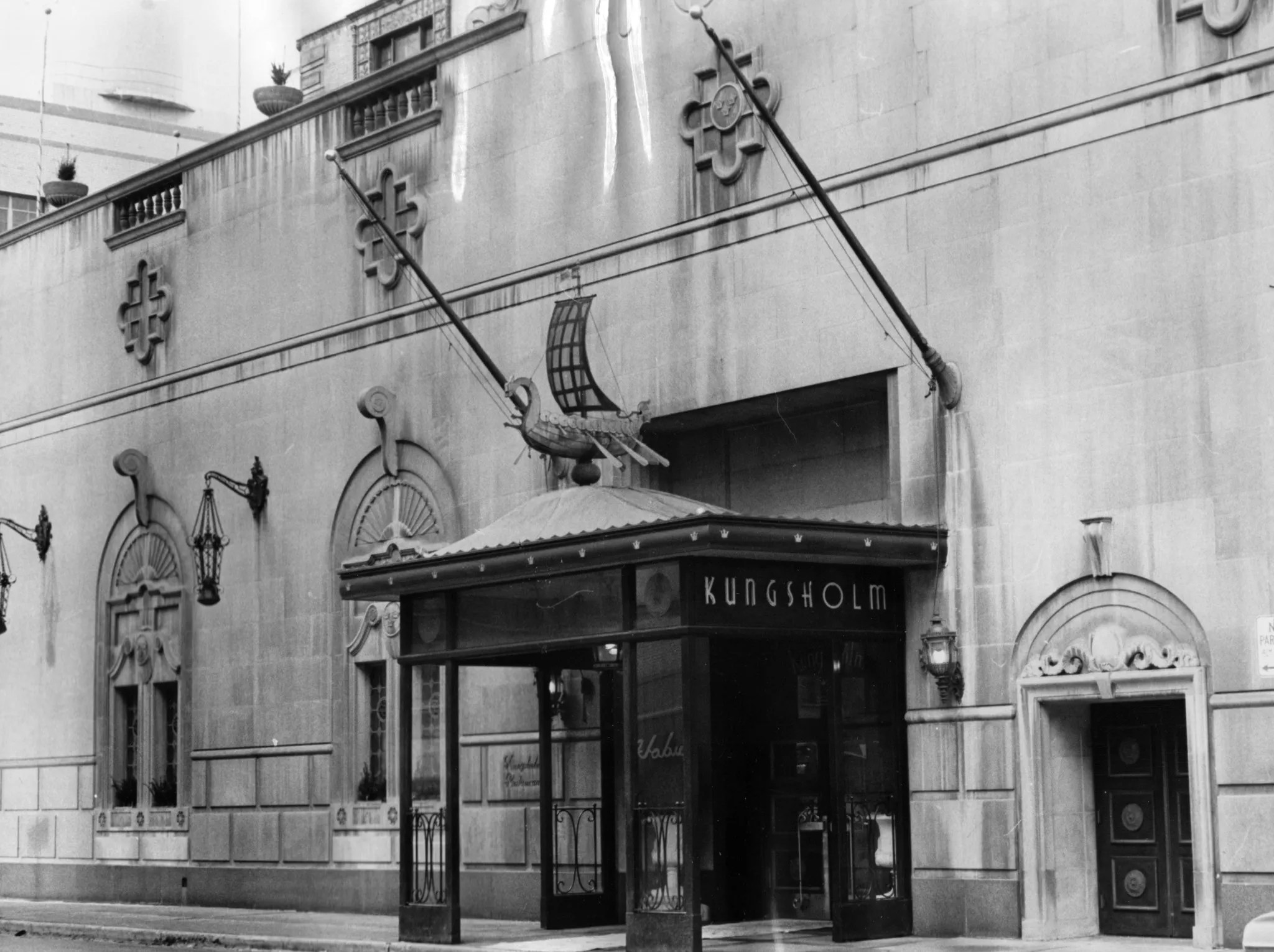
Mr. Chramer negotiated an agreement with the Wolff’s to install their puppet opera in the fourth floor ballroom of the one-time mansion. In the meantime, hostilities in Europe had begun and Ernest Wolf was serving in the U.S. Navy. In November of 1941, Fredrick Chramer along with Mrs. Wolff opened what was to become world famous as the “KUNGSHOLM MINIATURE GRAND OPERA“. Tragically, in February of 1947, fire destroyed the Kungsholm Puppet Opera. Mr. Chramer began plans at once to re-build the puppet opera on the street level in the space once occupied by the mansion’s carriage house. Later that year, Ernest Wolf decided to re-build his own puppet opera, which he called the “TIVOLI GRAND OPERA“. 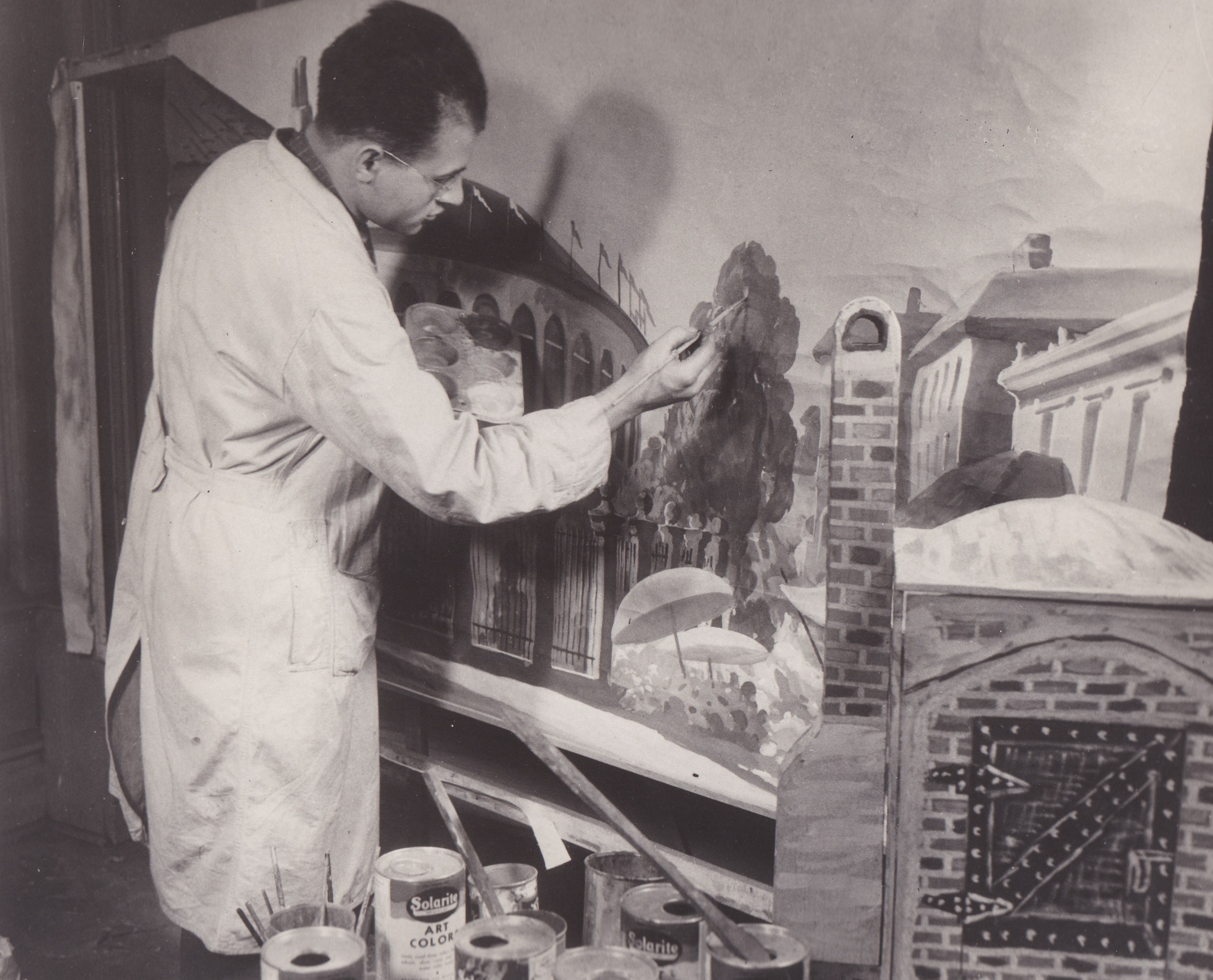
His mother once again joined him in his efforts having parted company with Chramer and his Kungsholm in a dispute shortly after the opening in 1941. Mr. Fosser was available and worked with the Wolffs on this project. Ernest Wolff was fascinated by many of the mechanical innovations that Bill Fosser had achieved with his own early puppets, which offered 18 points of articulation (as opposed to the 8 points found on Wolff’s original figures) and a fully functional walking mechanism that enabled the puppets to move each leg independently while walking or dancing. Although the Tivoli Grand Opera did perform several brief residencies (and even appeared on a live television broadcast), the venture ultimately was not successful.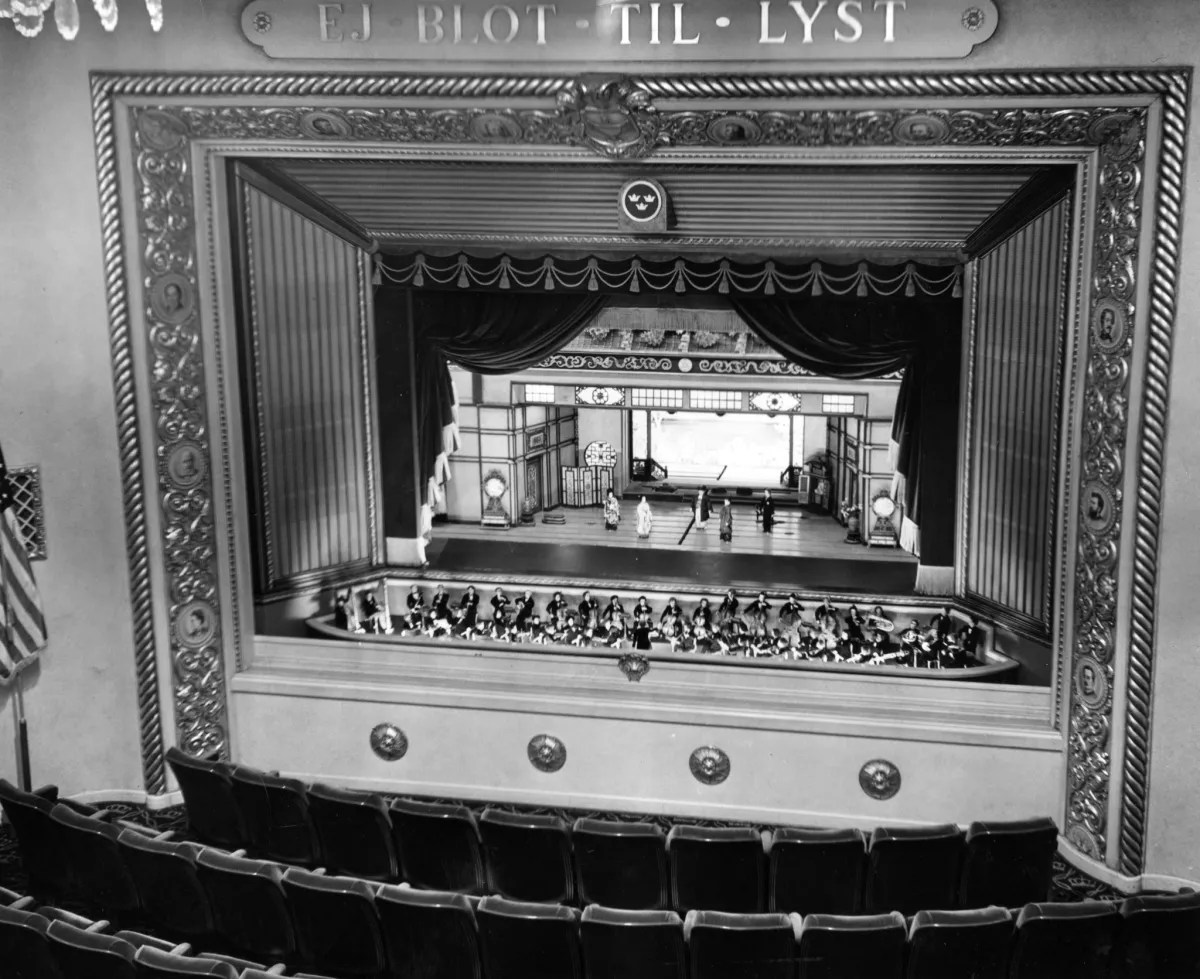
In the meantime Fredrick Chramer rebuilt the Kungsholm puppet opera creating an exquisite 208 seat theater with a mezzanine and box seats. Mr. Fosser returned for the opening in January of 1950 and would remain for three years.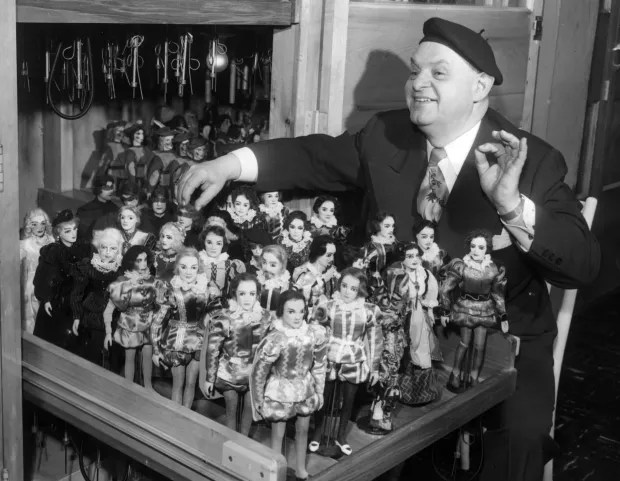
Mr. Chramer’s health began to fail in 1957 and the Kungsholm was leased to the Fred Harvey Group. After Mr. Chramer’s death, Mr. Fosser was asked to return to the Kungsholm as its Artistic Director. During his tenure as Artistic Director, Fosser was able to implement many of the technical innovations he’d been achieving with his early Opera in Focus puppets, building an entire production of Kismet at Kungsholm using his more advanced puppets. Unfortunately, the cost of building new productions and employing the massive crew of puppeteers, backstage technicians, and craftspeople it took to make the Kungsholm’s elaborate productions possible was substantial, and ticket sales declined as the “Disco era” rolled in. Kungsholm, like many beloved cultural institutions, became neglected by the public as a 30-year-old relic from the past.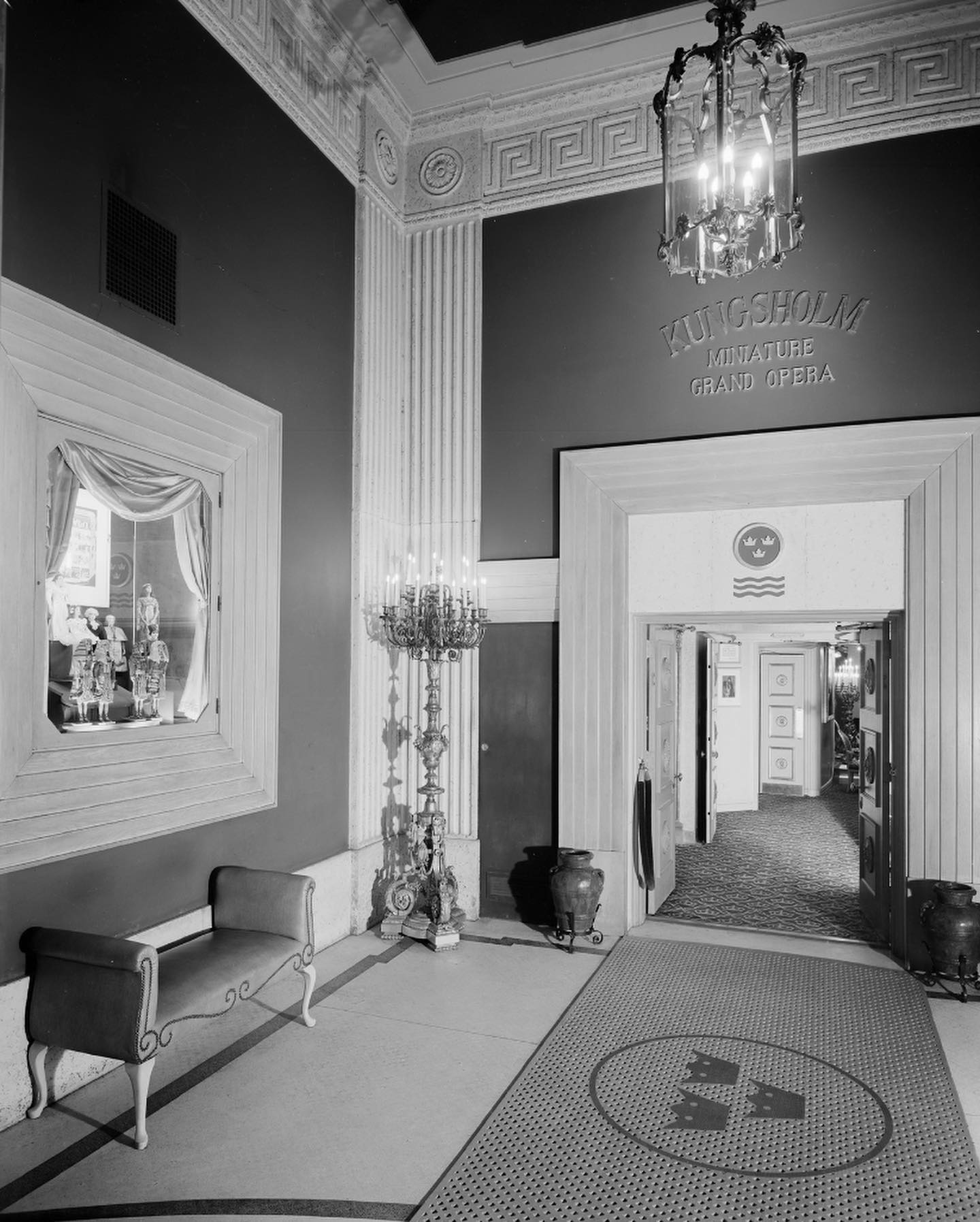
In 1971 the Kungsholm permanently closed. Some of the puppets and scenery found their way to the Museum of Science and Industry (where Opera in Focus also enjoyed a successful live residency before permanently settling in Rolling Meadows). The delicate manipulation mechanisms of many of the original puppets were destroyed when the ill-advised decision was made to create automated performances using the original puppets (effectively transforming instruments of human expression them into soulless automatons). The Museum of Science & Industry’s Kungsholm exhibit permanently closed in 2005.
Fortunately, the puppets that were housed in the MSI collection—nearly 400 puppets in total—were acquired by THE SWEDISH AMERICAN MUSEUM in Andersonville and are now a part of their permanent collection, which also contains original scenery and props from Kungsholm, making it the largest collection of Kungsholm artifacts in the world. Opera in Focus maintains a close partnership with the Swedish American Museum, regularly participating in special events at the museum commemorating the art and legacy of the Kungsholm Miniature Grand Opera. The Swedish American Museum’s Kungsholm collection is not on permanent display, so please visit their website for information on when the next Puppet Opera exhibit will be.
When the title of our production “OPERA IN FOCUS” was selected, the idea of a stage opening in the shape of a camera lens was chosen. Over the years, this design has been modified to a semi-circular opening set behind a traditional, ornate Italian style proscenium arch.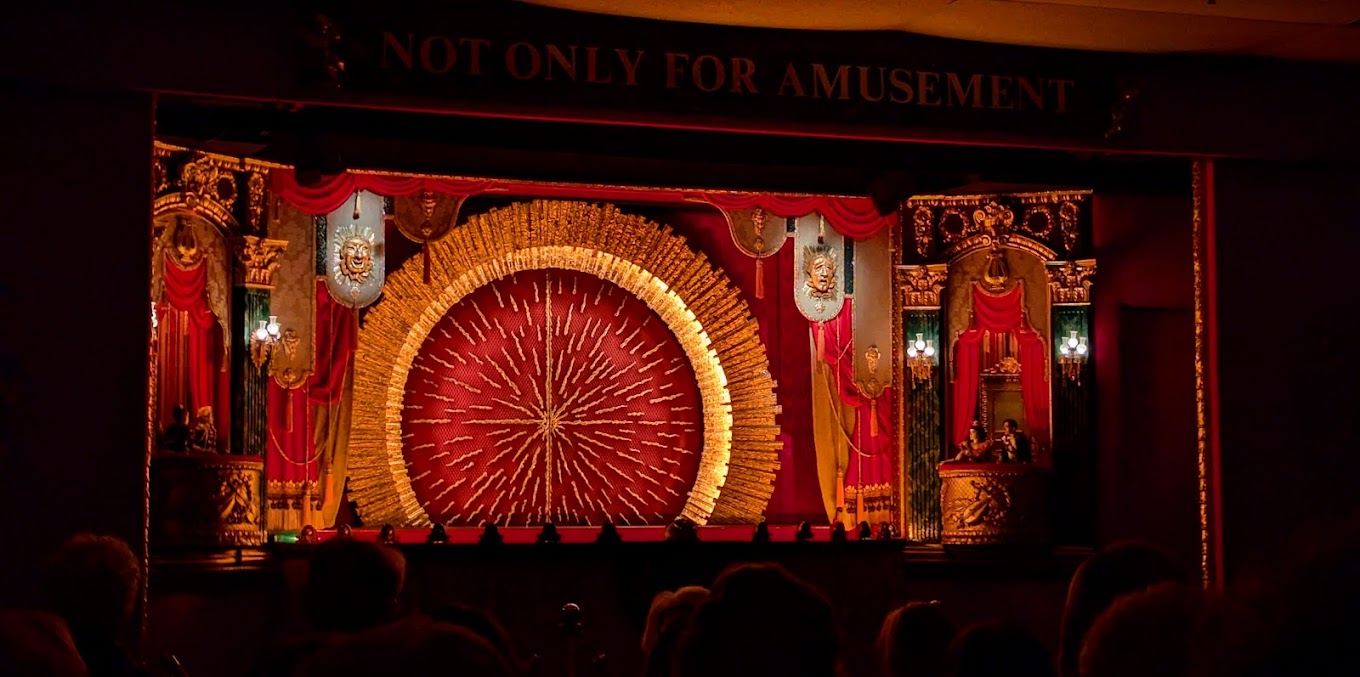
When Mr. Fosser was Artistic Director of the Kungsholm, he met the gifted 17-year-old puppeteer Paul Guerra with whom he went on to create over one-hundred puppet opera productions. Mr. Guerra was also a brilliant designer who conceived and executed all of the beautiful and intricate costumes used in our productions until his passing in 2007. The remarkable stage settings of Opera in Focus were designed, built and painted by Mr. Fosser until his passing in 2006. Since then, Fosser’s proteges, Justin Snyder and Shayne Snyder, have taken over designing and building all of the puppets, scenery, and props, using the same techniques that Fosser developed back in the 1950s.
Opera in Focus is the expression of a lifetime of involvement with puppets and opera. The format of presenting several scenes from well-known operas, operettas, and musicals in a performance of about an hour in length was developed to appeal to audiences of young people as well as adults who might not otherwise experience a musical drama.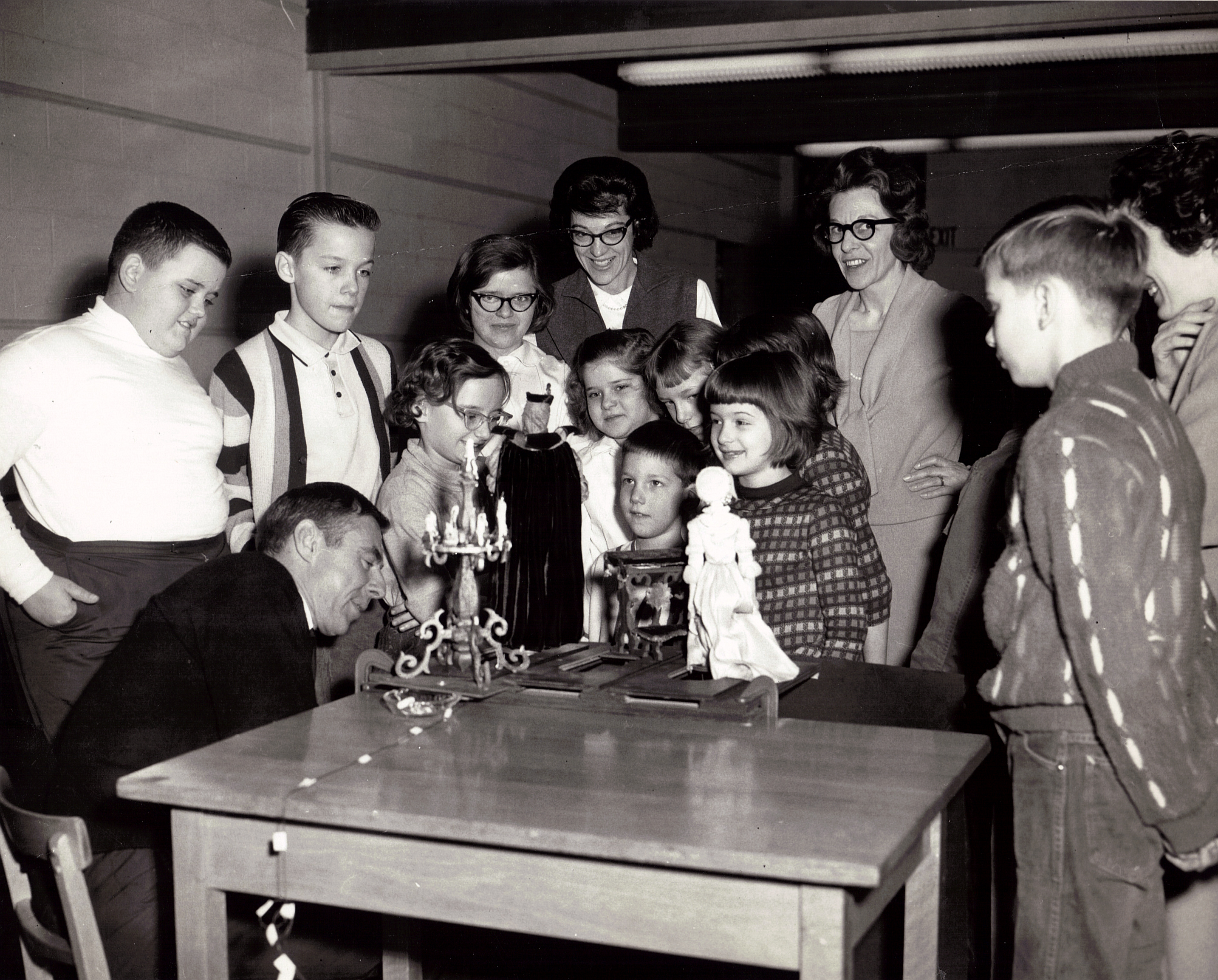
If you are interested in learning more about the history of Puppet Opera in Chicago, we invite you to check out Luman Coad’s, “Chicago’s Miniature Grand Opera” (autographed copies are available for purchase in the Opera in Focus online store).
If you have a group that would be interested in booking the puppeteers of Opera in Focus for a live presentation on the history of Puppet Opera in Chicago at your venue, feel free to reach out to us for more information regarding our historical presentations (featuring slideshows of never-before-seen-by-the-public photographs spanning nearly 100 years of Puppet Opera history).
